Grandma WongChinese Home Cooking
Launch promo ends in 00:00:00
Grandma Wong Shunde, Guangdong

The restaurants are not doing magic. They are doing five things nobody told you about.

Velveting, the sauce formula, the heat, the order of the wok, and the slurry at the end. Get those five right and your chicken comes out silky, your vegetables stay bright, and the sauce clings to the food instead of pooling on the plate. Ninety chapters, from my kitchen to yours.

Instant download · Yours forever
90Chapters
7Parts
150Pages
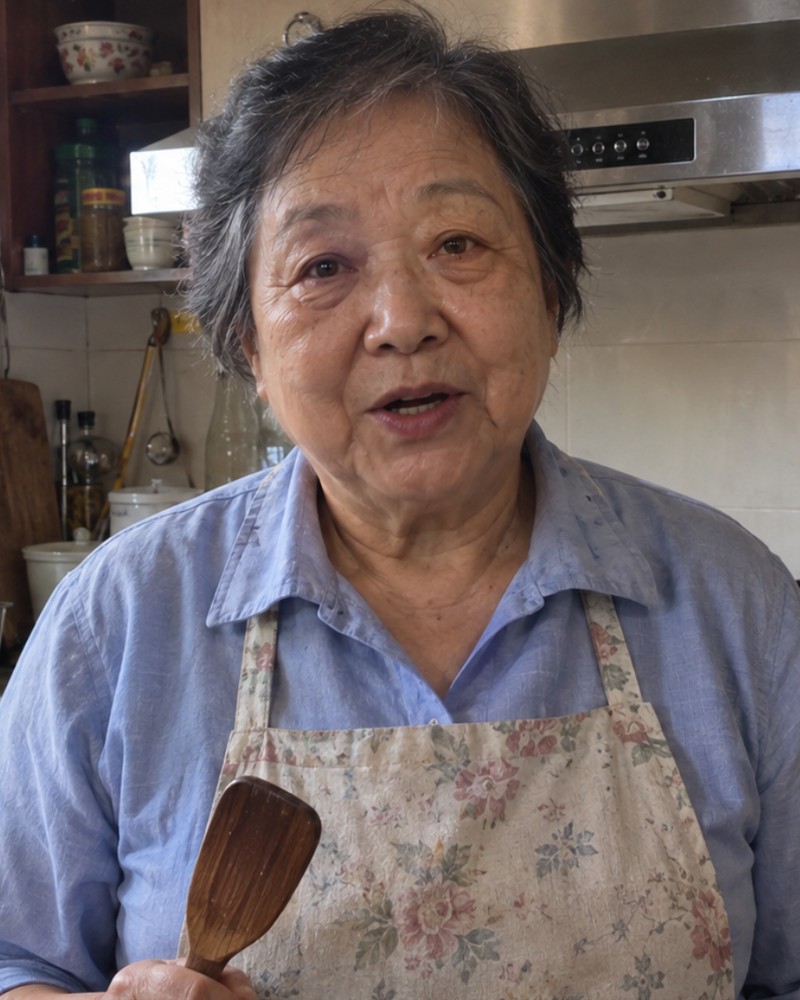
Grandma Wong in her kitchen

“A list of ingredients is not cooking.”

Grandma Wong
I · The Book

Every sauce, every stir-fry, and the tricks restaurants never share.

Every week somebody writes to me with the same complaint. “Grandma Wong, I followed the recipe exactly, and it tasted like soy sauce and sadness.” The chicken was dry. The vegetables were limp and grey. The sauce ran to the bottom of the plate.

I always ask the same questions back, and nine times out of ten the answers are the same. They used breast meat, cut thick, with nothing on it. They used one bottle of all-purpose soy sauce. They put everything in the pan at once. They cooked on medium heat because the smoke alarm scared them. And they poured the sauce in at the end with no cornstarch in it.

“None of that is their fault. Nobody told them. Western recipes for Chinese food are written by people who learned from other Western recipes, and each time a little more of the method falls out. What is left is a list of ingredients.”

I learned to cook in my family's kitchen in Shunde, in Guangdong province, then on the prep station and later the wok of a busy restaurant kitchen in Guangzhou, and for the last forty years in my own home for my own family. This book is that whole lifetime, set down in order — the pantry, the sauces, the wok, the takeout menu, the dumplings, the slow pot, and how to feed a family well on very little money.

Every chapter ends with a section called The Limits, where I tell you plainly what the method will not do and where a restaurant trick simply does not work on a home stove. A grandmother who only tells you the good news is not doing her job.

II · The Difference

Why the recipe failed you, and why the method will not.

A recipe gets you one dinner. The five things the restaurant does get you every dinner after that.

× Cooking from recipes and videos

  • Chicken goes into the wok naked, and comes out dry and stringy every time
  • One bottle of all-purpose soy sauce doing the job of four — like painting with one colour
  • Medium heat, because the smoke alarm scared you, so the food stews instead of searing
  • A whole family's dinner crowded into the pan at once, grey and watery by the end
  • Sauce poured in at the end that slides straight off and pools on the plate
  • $50 to $70 on a takeout night for a family of four, three nights a week

Cooking the way the restaurant does

  • Velveting — ten minutes of work that gives you the silky texture you thought was a better chicken
  • Light soy, dark soy, oyster sauce, Shaoxing and sesame oil, each doing its own job
  • Hot wok, cold oil, and the home-burner workarounds that get you close to restaurant wok hei
  • Small batches in the right order, so everything sears and nothing steams
  • The cornstarch slurry that makes the sauce cling and gives it the restaurant gloss
  • The same meal from your own wok for about $12 to $18 — cleaner, less salt, less sugar
III · What's Inside

Seven parts. Ninety chapters. Read in any order you like.

Parts One to Three are the foundation — the kitchen, the sauces, and the wok. After that, go straight to whatever you want to cook tonight.

Part One 13 chapters

The Chinese Kitchen

Which wok to buy and which to walk past, seasoning carbon steel the way my mother did, rust and patina, the cleaver and the eight cuts, the twelve-bottle pantry, ginger-garlic-scallion, how to shop an Asian grocery, and perfect rice every time.

Part Two 13 chapters

The Sauces

The one formula behind almost every stir-fry. Brown sauce, oyster and the Cantonese family, sweet and sour that is not red candy, garlic and fish-fragrant, black bean, chili oil, doubanjiang, hoisin and char siu glaze, the master stock, and the cornstarch slurry.

Part Three 13 chapters

The Wok and the Stir-Fry

Wok hei on a home stove. Heat management, hot wok cold oil, velveting chicken, the baking soda trick for beef, passing through oil, the stir-fry order, batch cooking, MSG and chicken powder, deep-frying safely, and double-frying for crisp that lasts.

Part Four 13 chapters

The Takeout Menu at Home

Beef and broccoli, General Tso's, orange chicken, kung pao both ways, sweet and sour pork, Mongolian beef, cashew chicken, egg foo young, lo mein and chow mein, egg rolls and crab rangoon, the three soups, honey walnut shrimp, and char siu in a home oven.

Part Five 13 chapters

Rice, Noodles, Dumplings, and Buns

The rules restaurants follow for fried rice, Yangzhou and five other versions, congee, clay pot rice with the crispy bottom, dan dan and scallion oil noodles, two-ingredient dumpling dough, fillings that stay juicy, folding and pan-frying, wontons, bao, and scallion pancakes.

Part Six 13 chapters

Steaming, Braising, and Soup

Cantonese steamed whole fish, egg custard as smooth as tofu, spare ribs with black bean, red-braised pork belly, soy sauce chicken, beef noodle soup, mapo tofu the right way, the long-boiled Cantonese soups, stocks, tea eggs, lion's head meatballs, and three cup chicken.

Part Seven 12 chapters

Vegetables, Tofu, Eggs, and the Frugal Kitchen

Garlic greens, dry-fried green beans, fish-fragrant eggplant, smashed cucumber, every kind of tofu, tomato and egg, quick pickles, nothing wasted from bones to leftover rice, cooking Chinese on a budget, meal prep, planning a family meal, and the festival table.

Every chapter The same four parts

How a chapter is built

The trouble — what usually goes wrong, in plain words. The fix — the method, the way I would show you at my elbow. The ratio box — the numbers worth memorising. The Limits — where it stops working, and what I will not promise you.
And at the back of the book

  • The Sauce Ratio Card — every sauce on one page, to keep by the stove
  • The Pantry Shopping List to take to the market
  • The Stir-Fry Timing Chart
  • Four weeks of weeknight menus
  • A substitution chart for when the store is out of something
  • A glossary of every Chinese kitchen word used
  • The Quick-Start Road Map — three things to do this week
  • Cups and spoons throughout, with grams where they matter
Get the Chinese Kitchen Bible — $47 $27
Instant download · Yours forever
IV · Reader Results

What early readers wrote to me.

★★★★★

“I velveted a pound of chicken thigh on the Tuesday and my husband asked which restaurant I had ordered from. Thirty years of dry stir-fry, fixed by one bowl and ten minutes.”

Carol D. · Michigan
★★★★★

“Chapter 14 is worth the whole price. One sauce formula, and suddenly I am not looking up a recipe every night — I just open the fridge and cook.”

Stephen A. · Leeds, UK
★★★★★

“What I trust is The Limits at the end of each chapter. She tells you straight when a restaurant trick will not work on a home stove. No other cookbook I own does that.”

Priya M. · Ontario
Grandma Wong
V · About

I am Wong. I have cooked at a wok for most of my life.

I grew up in Shunde, in Guangdong province, where my mother fed eleven people from one wok and never once measured the soy sauce. I learned standing beside her. Later I worked in a restaurant kitchen in Guangzhou — first the prep station, then the wok — and for the last forty years I have cooked at home for my own family.

I am not a chef and I do not have a restaurant. What I have is the prep station, the wok station, and forty years of home cooking after that: the small corrections you only learn by making the same dish a thousand times, and the things a restaurant does every service that nobody ever writes down.

Some of these lessons come from the videos my grandchildren help me post on our channel. Most of them go further than the videos can. A video is ten minutes long. A sauce takes a lifetime to understand, and I can give you a good piece of that lifetime in these pages.

I did not write this book to make you feel bad about takeout. Takeout is fine. I eat it too, when someone else is paying.

WongGrandma Wong · Shunde, Guangdong
VI · The Book

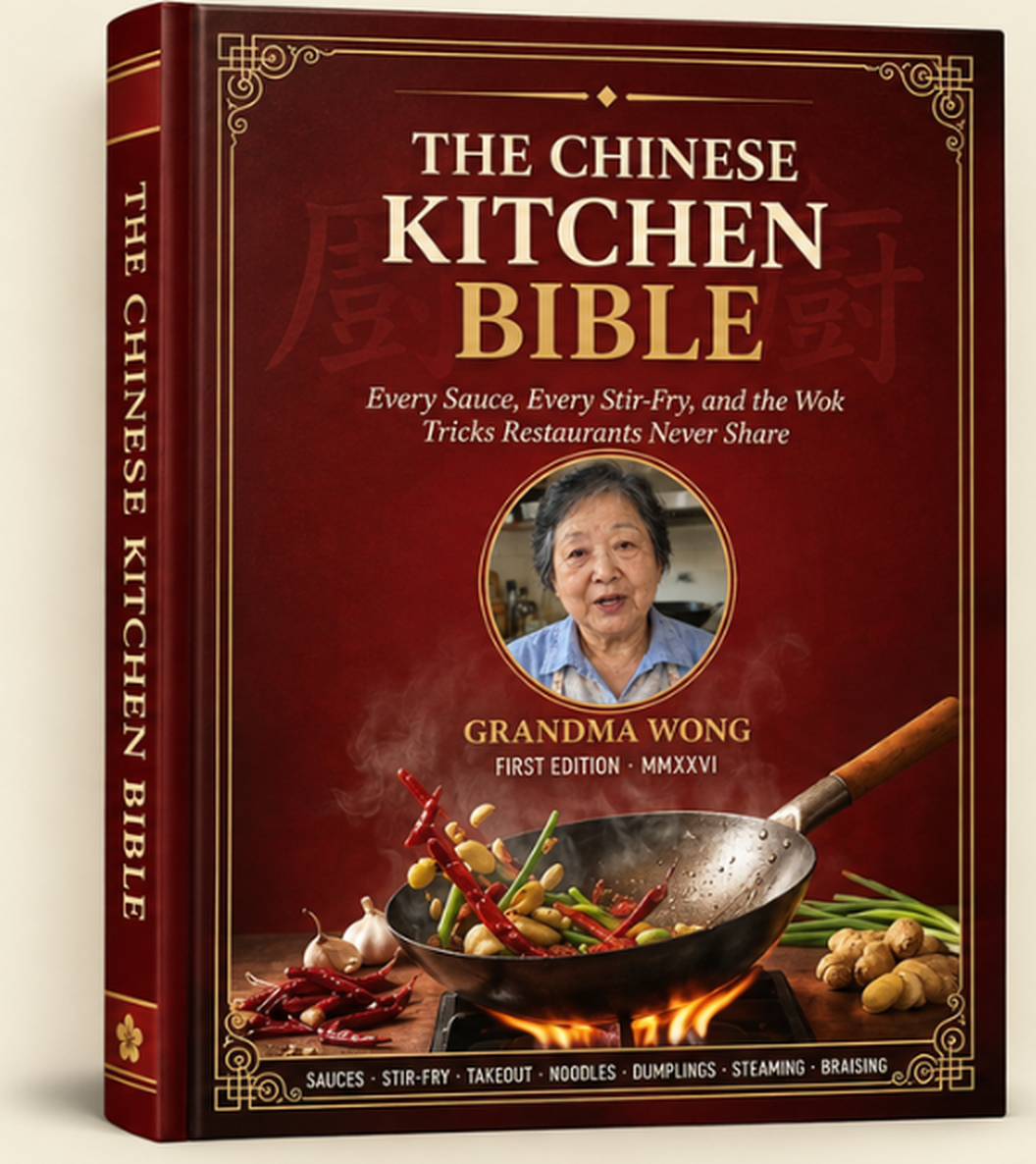
The Chinese Kitchen Bible

Every sauce, every stir-fry, and the wok tricks restaurants never share.

First Edition · Illustrated · Instant Download
The Chinese Kitchen Bible by Grandma Wong

The Chinese Kitchen Bible

Ninety chapters from a Shunde kitchen — the pantry, the sauces, the wok, the whole takeout menu, and how to feed a family well on very little.

  • The complete 150-page illustrated book (PDF)
  • 90 chapters across 7 parts — kitchen, sauces, wok, takeout, noodles & dumplings, steaming & braising, vegetables
  • The Limits in every single chapter — where the trick stops working
  • The Sauce Ratio Card — every sauce on one page for the stove
  • The pantry shopping list and the stir-fry timing chart
  • Four weeks of weeknight menus
  • A substitution chart for when the store is out of something
  • A full glossary of every Chinese kitchen word used
  • Reads on phone, tablet, computer — or print it for the kitchen
$47 $27 Launch promo
Get the Chinese Kitchen Bible — $47 $27
Instant download · Yours forever
VisaMastercardAmexPayPalApple Pay Secure checkout via Gumroad
VII · Questions

Before you order.

Is this real Chinese home cooking, or the takeout version?

Both, on purpose. Parts One to Three and Parts Five to Seven are the cooking of one Chinese home — mine, and my mother's before me, in Shunde. Part Four is the American takeout menu, dish by dish, because that is what most people actually want to make on a Tuesday, and I would rather teach you to make General Tso's well than pretend nobody eats it. I do not speak for every region of China; a cook in Sichuan would season half of these dishes differently, and I say so where it matters. The Limits at the end of each chapter is where I tell you plainly what my way does not cover.

Your videos are free. Why would I buy the book?

The videos are one dish at a time, in whatever order we happen to film them. A video is ten minutes long. The book is the whole method in order — the pantry, then the sauces, then the wok, and only then the dishes — and it holds the parts that do not film well: the sauce ratios, the timing chart, the substitution chart, the weeknight menus, and the glossary. Keep watching the videos either way. They stay free.

Do I need a special wok, a gas flame, or an Asian grocery store?

No. Chapter 2 tells you which wok to buy and which ones to walk past, and the cheap carbon steel one is the right answer. Chapters 27 and 28 are about getting close to restaurant heat on an ordinary home burner, electric included — and they tell you honestly where you cannot. Chapter 12 walks you through an Asian grocery if you have one, but the Quick-Start Road Map needs five bottles that most big supermarkets carry in the international aisle, for about $20 to $25, and the substitution chart at the back covers the rest.

Why only $27 for a 150-page book?

Because it is a file, not a paper book. There is no printing, no shipping, and no shop taking its half. $27 is the launch price while the first edition is new; $47 is what it goes back to. One takeout night for a family costs more than this book. I would rather it sat in a thousand kitchens than on a shelf in ten.

What format is it, and how do I get it?

A PDF, delivered the moment you order. Open it on a phone, a tablet, or a computer, or print the pages you want and keep them near the stove — that is what I do with the sauce ratio card. It is yours to keep, and it downloads again any time from your Gumroad library.

I am a complete beginner. Is this too advanced?

It starts further back than most books — how to season a wok, how to hold a cleaver, what each bottle in the cupboard is actually for, and how to cook a pot of rice properly. The Quick-Start Road Map at the front gives you three things to do this week, and the chapters are short on purpose: you should be able to read one while the rice cooks and make it the same night. If you have cooked Chinese food for years, start at Part Two — the sauces are where experienced cooks tell me they learn the most.

Grandma Wong
Wait — one thing

Less than half a takeout order.

A family of four spends $50 to $70 on a takeout night. This is ninety chapters, once, and then you cook it better at home for about $15. The launch price ends tonight — after that it goes back to $47.

Get the Chinese Kitchen Bible — $47 $27
Instant download · Yours forever
or see what's inside →